
Innovator of the Month: RESET Energy
Making renewable energy dispatchable for the places that need it most
Across Australia’s remote industrial regions, renewable energy is abundant. The challenge is making that energy available when it is needed — day or night, through changing weather conditions and without relying on an increasingly expensive diesel supply chain.
That is the problem RESET Energy is setting out to solve.
Founded by systems architect Scott Anderson, RESET Energy is developing a long-duration renewable energy infrastructure platform designed to provide reliable, dispatchable power for remote and energy-intensive operations.
Its initial focus is the mining sector, particularly remote operations where diesel generation remains critical to maintaining continuous power and where fuel transportation can represent a significant operational and financial burden. RESET Energy are also looking at this as a potential solution for AI data centres and energy heavy industry.
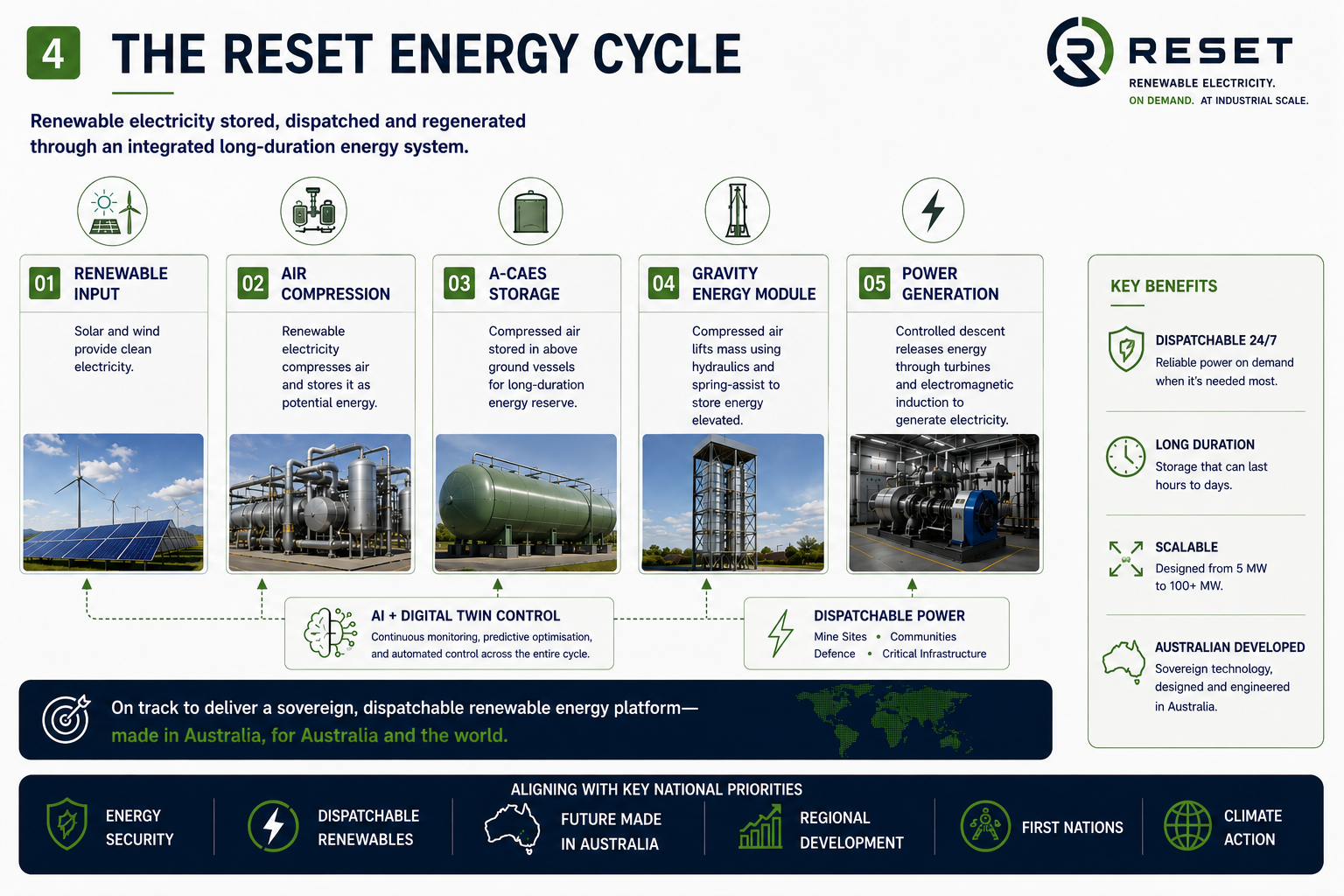
Rather than treating energy storage as a single technology problem, RESET is developing an integrated system that combines renewable generation, mechanical energy storage, gravity-based energy recovery, thermal storage and intelligent control.
The objective is simple:
Capture renewable energy when it is available, store it for the long term, and dispatch it when the operation needs it.
A different approach to long-duration energy storage
RESET's architecture brings together multiple technologies to create what the company describes as a long-duration renewable energy platform.
At its core is a combination of solar generation, compressed-air energy storage and a 50-metre gravity-based energy conversion system.
During periods of renewable generation, surplus electricity can be used to compress and store air. That stored energy can subsequently be released through the system to drive mechanical processes and support the controlled movement of mass through the gravity system, with energy recovered through generators and other energy-recovery mechanisms.
The architecture is designed to work alongside additional thermal storage and advanced control systems, allowing different forms of stored energy to be coordinated according to generation, demand and operating conditions.
An AI-driven control layer is intended to optimise the system in real time, forecasting renewable generation and load requirements and determining how stored energy should be managed and dispatched.
The result is not another conventional battery.
RESET is pursuing a multi-technology energy infrastructure platform designed specifically around long-duration storage and dispatchability.
Tackling diesel dependence in remote mining
For remote mines, reliable electricity is not optional.
Diesel generators provide proven dispatchable power, but they also create significant exposure to fuel prices, transportation, storage and supply-chain disruption.
RESET's vision is to replace a significant portion of that diesel dependence with renewable generation backed by long-duration energy storage.
The company's Energy-as-a-Service model is designed to support this transition without requiring mining operators to own and operate the underlying energy infrastructure themselves.
Under a long-term Power Purchase Agreement, RESET would build, own and maintain the energy infrastructure while the customer pays for the electricity delivered.
This creates the potential for mining operators to transition towards renewable power while maintaining the reliability required for continuous industrial operations.
Building the technology through partnerships
RESET is taking a structured approach to moving from concept towards commercial deployment.
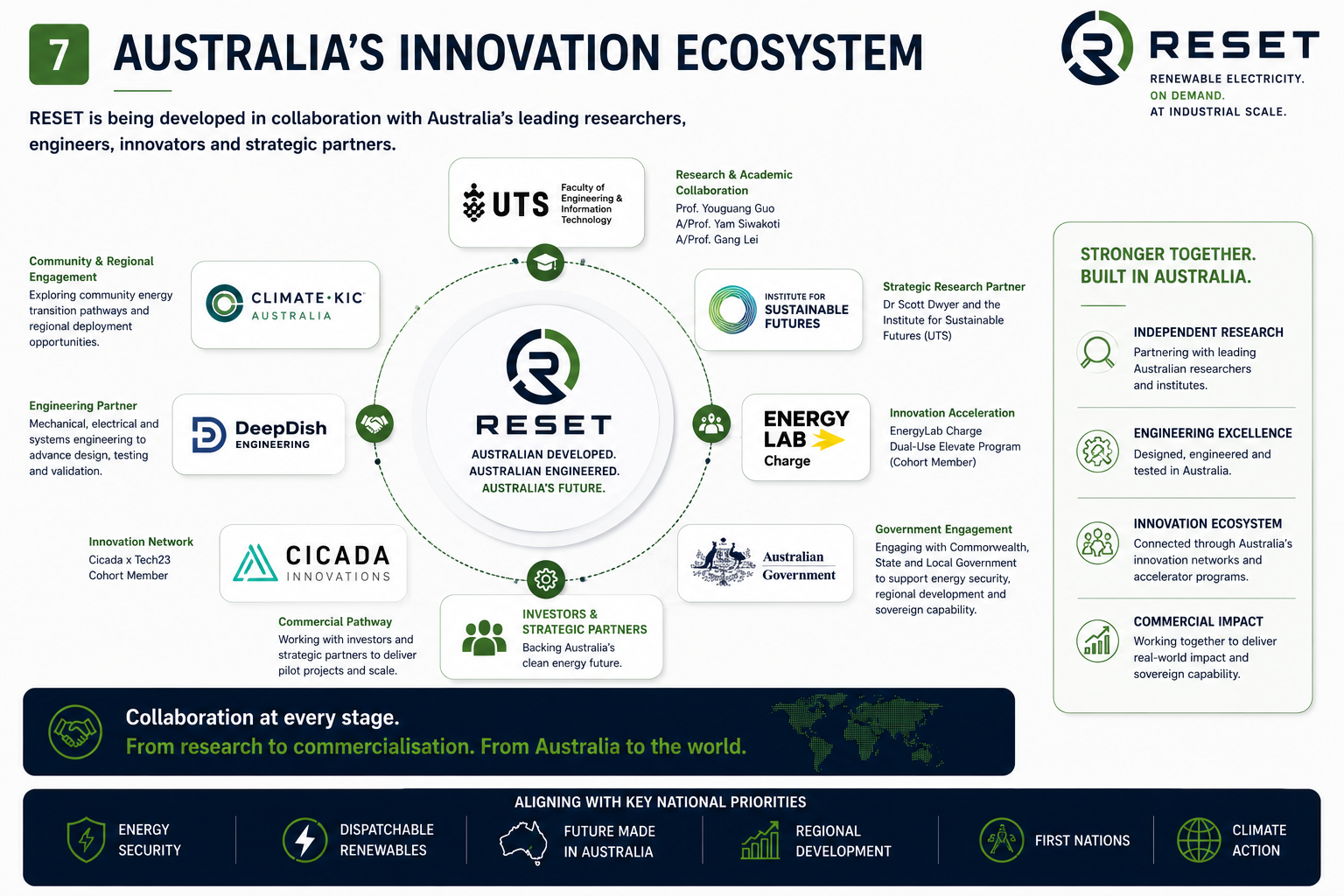
The company is working with the University of Technology Sydney (UTS) on research and engineering activities involving power electronics, system performance and optimisation.
The RESET team is also working with DeepDish Engineering on engineering design and independent technical review as the architecture develops.
The company is pursuing a pathway towards pilot deployment in Western Australia's Pilbara region, providing an opportunity to ultimately test the system in the type of demanding environment it has been designed to serve.
RESET is also pursuing Australian grant and research funding pathways, including opportunities through the Australian Research Council and the Australian Renewable Energy Agency, to accelerate development and validation.
Beyond mining
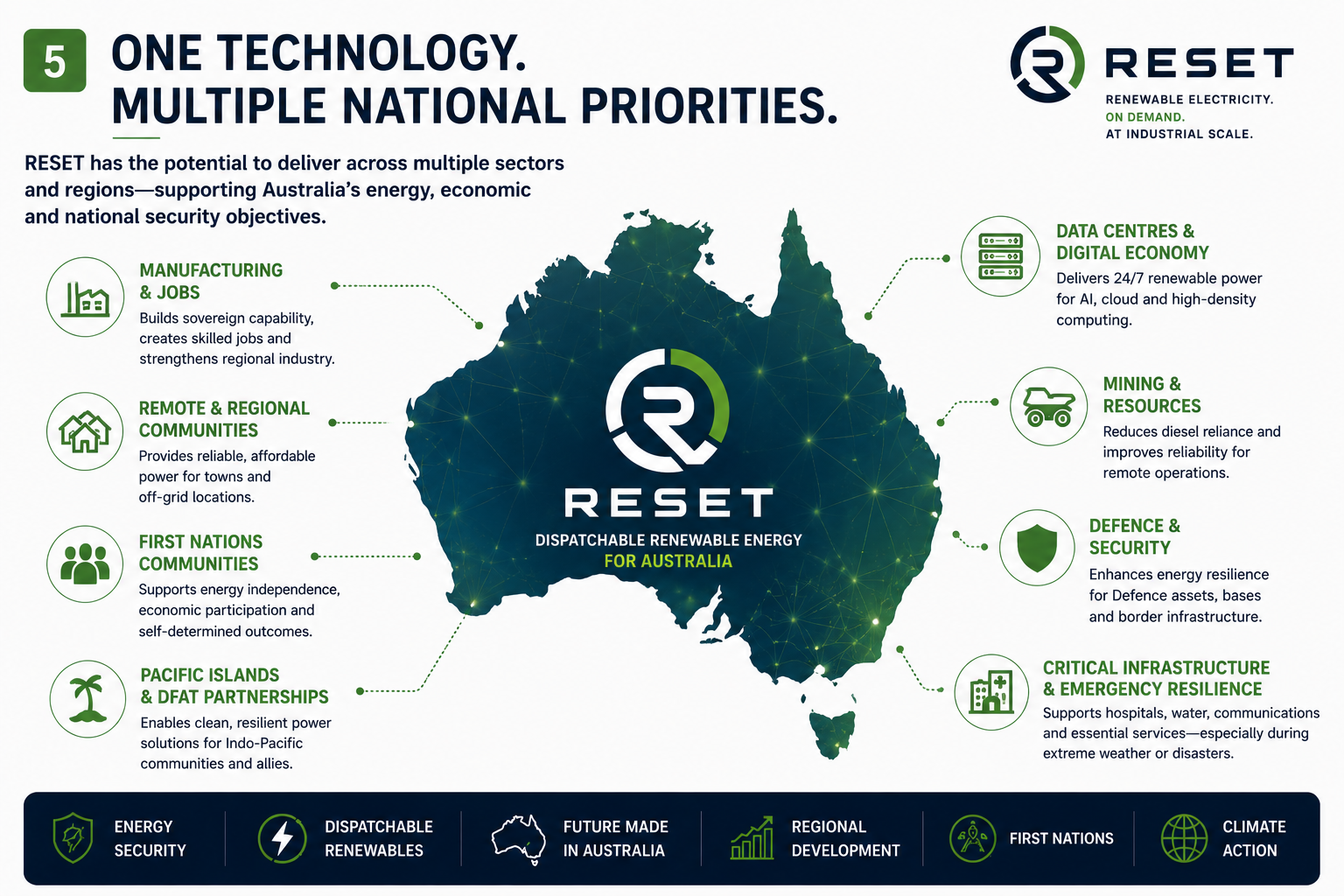
While remote mining is RESET's initial target market, the underlying challenge exists across many parts of the energy system.
Remote communities, island grids, critical infrastructure and data centres all require reliable electricity and increasingly need to integrate higher levels of renewable generation without compromising energy security.
RESET's modular approach is being developed with these future applications in mind.
The company's long-term vision is to contribute to an energy system where renewable generation is not limited by the time of day or the availability of the sun — but can be stored, managed and dispatched when it is actually required.
The RESET vision
The transition to renewable energy is no longer simply about generating more electricity from the sun and wind.
It is about building the infrastructure that allows that electricity to become reliable, dispatchable and commercially useful.
That is the opportunity RESET Energy is pursuing.
By combining renewable generation with long-duration mechanical and thermal energy storage, intelligent controls and energy recovery, RESET is developing a new approach to powering the remote industries that underpin Australia's economy.
The journey from concept to commercial deployment is still underway, but the ambition is clear:
Make renewable electricity dependable enough to replace diesel where reliability matters most.
To learn more about RESET Energy, visit resetenergy.org.